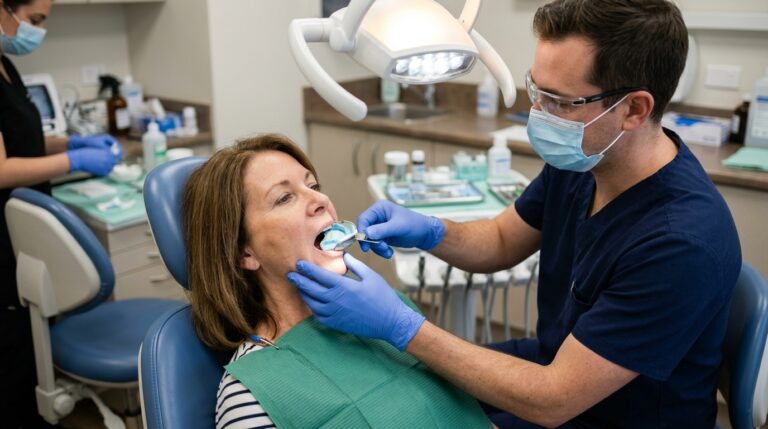
Few celebrity smiles have been studied, debated, and dissected as much as Tom Cruise teeth. From his early days in 1980s films to his current Mission Impossible era, Cruise’s dental transformation is one of Hollywood’s most visible — and most fascinating , makeover stories. What makes it particularly interesting is his “middle tooth,” a dental asymmetry that has become a signature feature rather than a flaw.
This article traces the full dental timeline of Tom Cruise, explains the anatomy behind his famous midline shift, and breaks down the specific procedures that likely contributed to his smile evolution.
Who Is Tom Cruise
Tom Cruise, born Thomas Cruise Mapother IV in 1962, is one of the highest-grossing actors in film history. With a career spanning over four decades and blockbuster franchises including Top Gun, Mission: Impossible, and Jerry Maguire, Cruise has maintained a level of stardom that few actors have matched. His physical appearance — including his smile , has been a constant subject of public fascination.
What many fans don’t realize is that Cruise’s iconic smile didn’t come naturally. His teeth underwent significant changes throughout his career, and the journey from his original dentition to his current look is a case study in modern cosmetic dentistry.
Tom Cruise The “Middle Tooth” Phenomenon
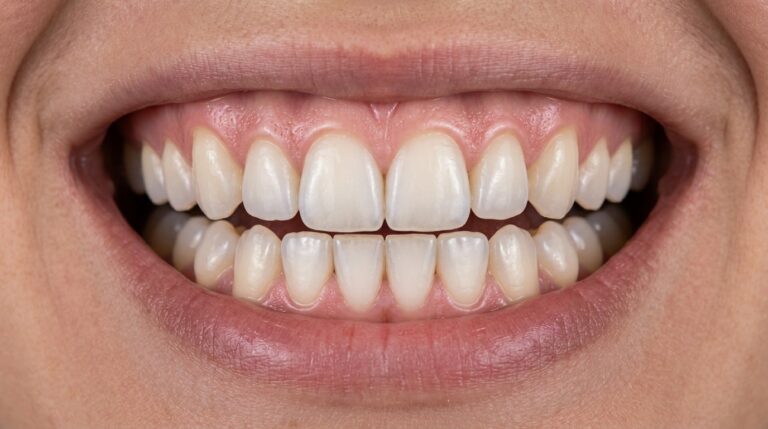
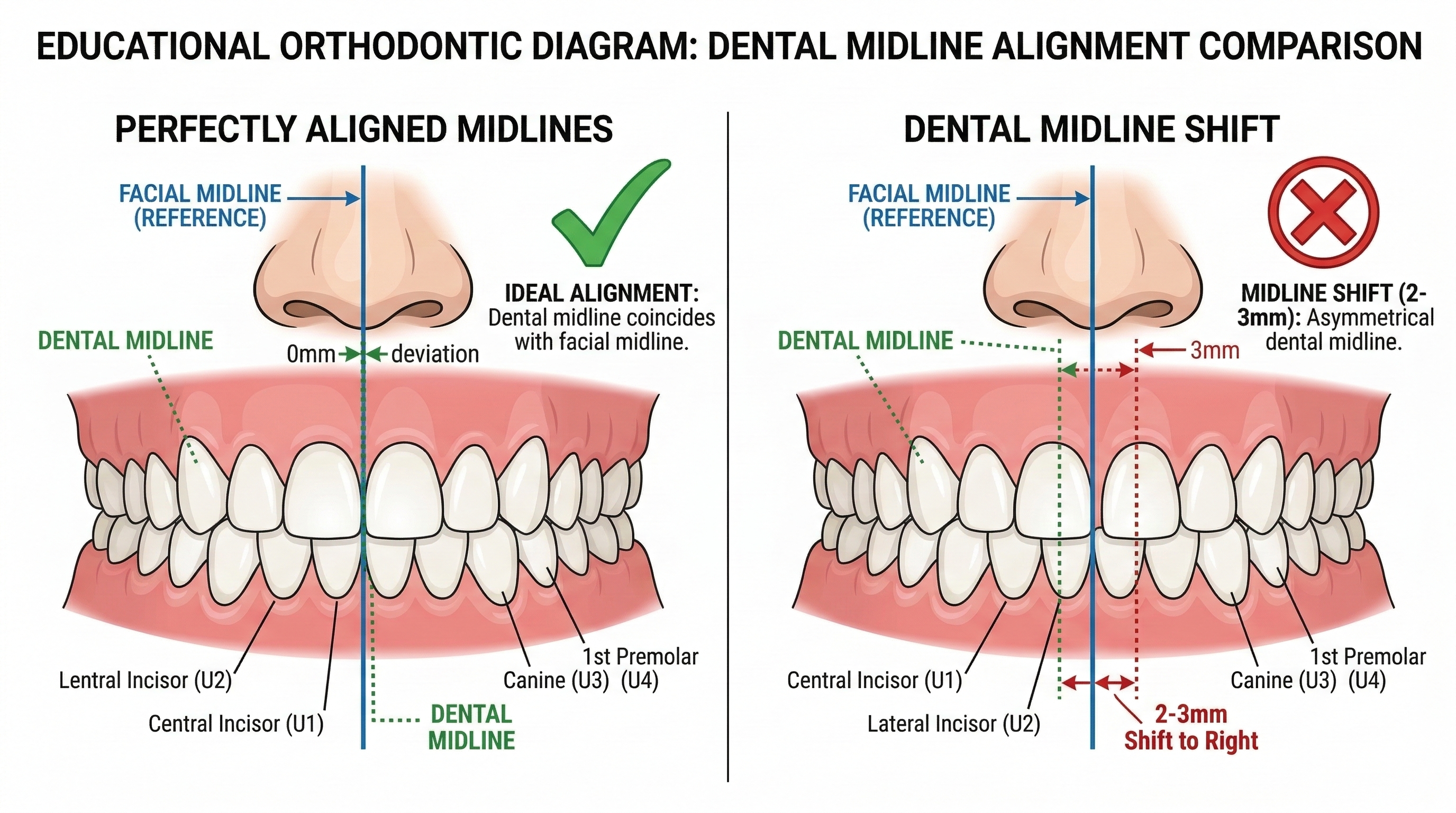
The most discussed feature of Tom Cruise teeth is what the internet calls his “middle tooth” — a single upper front tooth that appears to sit directly at the center of his face, rather than the expected gap between two central incisors. This creates the illusion that he has an odd number of front teeth.
Dental vs. Facial Midline: The Anatomy
In most people, the dental midline (the line between the two upper central incisors) aligns roughly with the facial midline (an imaginary line running down the center of the face through the nose and chin). In Cruise’s case, his dental midline is shifted approximately 2-3 mm to the right. This means his right central incisor sits almost exactly at the center of his upper lip, creating the “middle tooth” effect.

This type of midline discrepancy is actually more common than people think. Studies show that only about 70% of the population has a perfectly aligned dental and facial midline. The remaining 30% have some degree of shift , it’s just rarely as visible or as famous as Cruise’s.
The “Missing Premolar” Theory
One widely circulated theory suggests Cruise had a premolar extracted on one side during childhood or adolescence. When a premolar is removed and the remaining teeth drift to fill the space, it can shift the entire midline. This would explain both the midline discrepancy and the asymmetric arch form visible in earlier photos of his smile.
While this theory has never been confirmed by Cruise or his dental team, it’s consistent with the clinical presentation. Orthodontists frequently encounter this pattern in patients who underwent extractions as teenagers.
Malocclusion & The “3 Front Teeth” Illusion
Early photos of Cruise show a Class II malocclusion — an overbite where the upper teeth protrude significantly over the lower teeth. Combined with the midline shift, this created what some observers describe as a “3 front teeth” illusion when Cruise smiled. The shifted midline placed one tooth directly under his nose, making it appear as though he had three teeth across the front instead of the usual four visible central and lateral incisors.
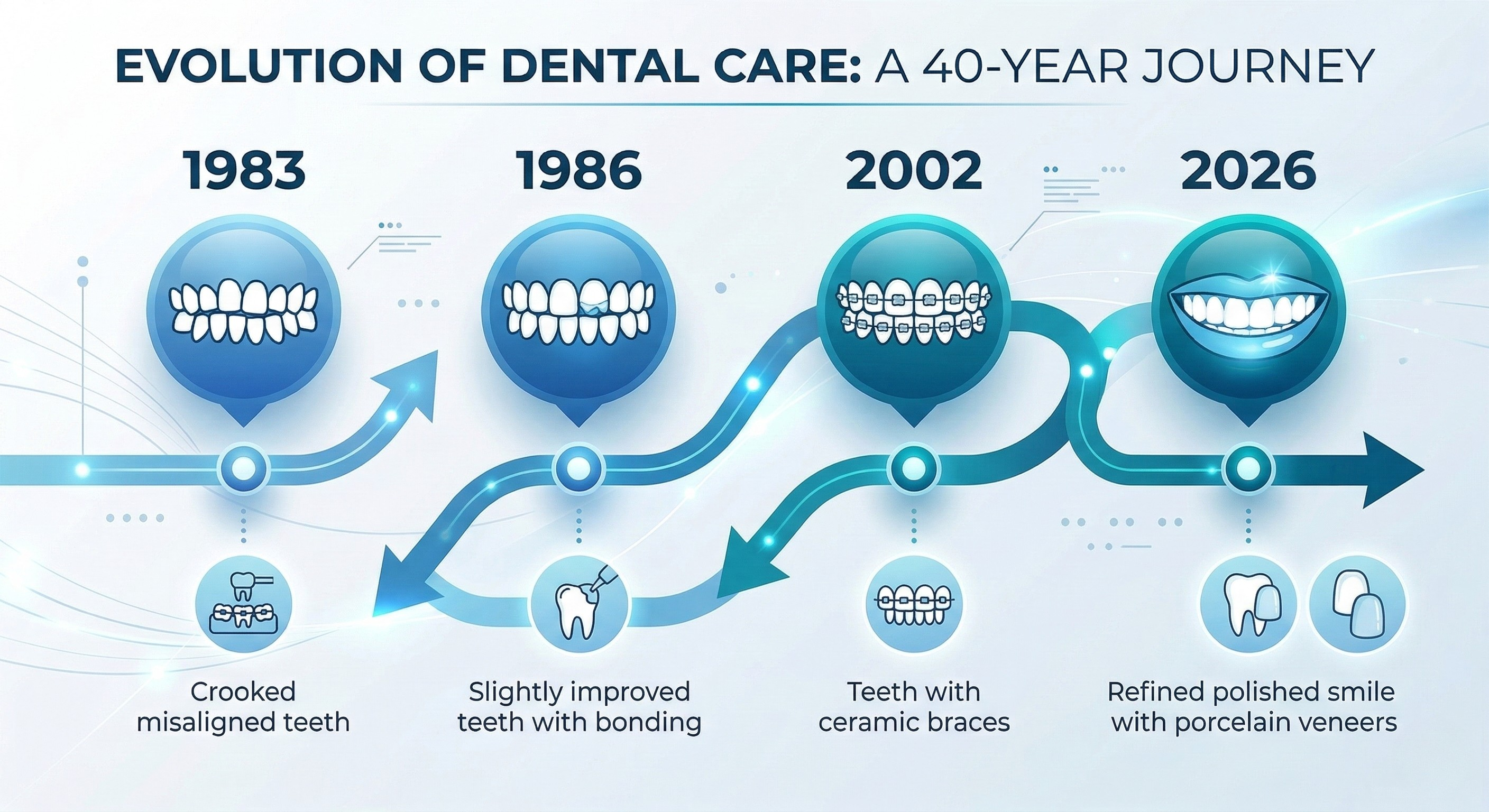
Timeline: A Visual History (1980s to Present)
1983: The Outsiders (The “Hockey Puck” Injury)
In his early film appearances, Cruise’s natural teeth were clearly visible: slightly crooked, discolored, and with a noticeable midline shift. Reports suggest he also suffered a dental injury during a hockey game as a teenager, which may have damaged one or more front teeth. In The Outsiders (1983), his smile shows significant irregularity.
1985-1986: Legend & Top Gun (Early Bonding)
By the time Cruise filmed Legend (1985) and Top Gun (1986), his teeth appeared somewhat improved , likely through cosmetic bonding, a procedure where tooth-colored composite resin is applied to reshape and improve the appearance of teeth. The midline shift remained, but the overall alignment and color were noticeably better. This era represents the first visible phase of his dental transformation.
2002: The Minority Report Braces
In one of Hollywood’s most surprising dental moments, Cruise appeared on the red carpet in 2002 wearing ceramic braces. At 40 years old, he publicly underwent orthodontic treatment — a move that helped normalize adult braces for millions of people. The ceramic brackets were tooth-colored and less visible than traditional metal braces, but they were still clearly noticeable in photos.
This orthodontic phase addressed his bite alignment and partially corrected the midline shift. After approximately a year of treatment, his teeth appeared significantly straighter, though the midline remained slightly off-center.
2023: The Mission Impossible Era (Current Look)
In recent years, Cruise’s smile appears remarkably refined. His teeth are uniformly white, well-proportioned, and show the hallmarks of high-quality porcelain restorations. The midline shift is still present , it’s a structural characteristic that can’t be fully corrected without significant orthodontic or surgical intervention — but it’s far less noticeable than in his earlier career.
What’s notable about his current look is that it doesn’t appear over-done. Unlike many celebrity dental makeovers that produce an unnaturally perfect “chiclet” look, Cruise’s teeth retain subtle variations that make them look natural.
Adult Orthodontics (Ceramic Brackets)
Cruise’s 2002 orthodontic treatment is the only procedure he’s publicly confirmed through his appearance. Ceramic brackets were used to improve alignment, correct his bite, and partially address the midline discrepancy. Adult orthodontics has become increasingly common, and Cruise’s willingness to wear braces at 40 is often cited as a turning point in public acceptance of the treatment.
Porcelain Veneers & Crowns
The uniform color, shape, and surface texture of Cruise’s current teeth strongly suggest porcelain restorations. Based on the visual evidence, dental professionals speculate that he has a combination of porcelain veneers on the anterior (front) teeth and possibly full porcelain crowns on teeth that required more extensive restoration. The quality of the work is evident , his teeth have natural translucency and subtle color variation rather than the flat, opaque white associated with lower-quality restorations.
Gingivectomy
Comparing earlier photos with recent ones, Cruise’s gum line appears more even and symmetric. This suggests a possible gingivectomy — a procedure that reshapes the gum tissue to create a more uniform gum line. Gingivectomy is a common component of smile design treatments and can dramatically improve the overall aesthetics of a smile.
Root Canal Treatment
Given the reported hockey injury to his front teeth and the extent of restorative work visible over the years, it’s likely that one or more of Cruise’s front teeth required root canal treatment. Teeth that suffer trauma often develop pulp necrosis years later, requiring endodontic intervention before they can be restored with crowns or veneers.
Why His Asymmetry is Actually a “Win”
Interestingly, many dental professionals argue that Cruise’s midline asymmetry is part of what makes his smile work. Perfect symmetry can look artificial and unsettling , a phenomenon sometimes called the “uncanny valley” in dental aesthetics. Cruise’s slightly off-center midline gives his smile a natural, human quality that a mathematically perfect arrangement might lack.
This principle is actually applied in modern smile design. When designing veneers or crowns, experienced cosmetic dentists often introduce subtle imperfections — a slightly different incisal edge height, a minor rotation, a gentle color variation , to prevent the result from looking like a set of identical tiles. Cruise’s teeth demonstrate this principle on a grand, public scale.
Ready to transform your smile? Get a free quote or contact us today.
FAQ: Common Questions About Tom Cruise’s Smile
Does Tom Cruise have a middle tooth?
Technically, no — he has two central incisors like everyone else. The “middle tooth” appearance is caused by a dental midline shift of approximately 2-3 mm. His right central incisor sits almost directly under the center of his nose, creating the visual illusion of a single centered tooth.
Why are Tom Cruise’s teeth off center?
The midline shift is likely the result of a childhood tooth extraction (possibly a premolar) that caused the remaining teeth to drift and shift the dental midline away from the facial midline. Genetics, jaw growth patterns, and early dental trauma may also have contributed.
Did Tom Cruise wear braces as an adult?
Yes. In 2002, Cruise publicly wore ceramic braces at the age of 40. The orthodontic treatment lasted approximately one year and addressed his bite alignment and tooth positioning. His decision to wear braces as a public figure helped reduce the stigma around adult orthodontic treatment.
Are Tom Cruise’s teeth veneers or implants?
Based on visual analysis, dental professionals believe Cruise has porcelain veneers and/or crowns rather than implants. His natural teeth appear to be intact (not extracted), and the restorations are layered over his existing tooth structure. The high quality of the work suggests custom-fabricated porcelain restorations.
Did Tom Cruise remove a tooth for a movie?
There is no credible evidence that Cruise removed a tooth for any film role. While actors occasionally make temporary dental modifications for roles, the changes in Cruise’s teeth over the years are consistent with progressive cosmetic dental treatment rather than any film-related extraction.
Conclusion
Tom Cruise’s dental journey , from crooked, discolored teeth in the 1980s to one of Hollywood’s most recognizable smiles — is a real-world demonstration of what modern cosmetic dentistry can achieve. His famous “middle tooth” isn’t a flaw; it’s a midline discrepancy that has become part of his identity. Through a combination of orthodontics, porcelain restorations, and likely gum recontouring, his smile evolved gradually over four decades while retaining its natural character.
For anyone considering cosmetic dental work, Cruise’s story illustrates an important principle: the goal isn’t mathematical perfection , it’s a result that looks natural, functions well, and fits the individual’s face. Sometimes, keeping a subtle imperfection is what makes a smile truly memorable.
This article is for informational purposes only and does not replace professional dental advice. Procedure details about Tom Cruise’s teeth are based on publicly available photos and professional speculation, not confirmed medical records.