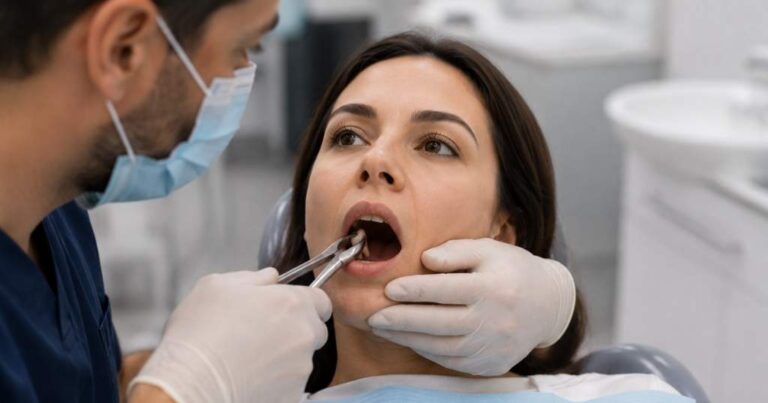
Speech difficulties after dental crowns are a recognized but often temporary adaptation phase. Many patients who have recently received crowns describe changes in pronunciation, slight lisping, or difficulty with specific sounds. At our Smile Craft clinic in Antalya, we discuss this potential adjustment with patients before crown placement to set realistic expectations and provide guidance on managing the transition.
This article explores why speech changes can occur after dental crowns, common adaptation patterns, practical strategies to ease the transition, and situations where professional follow-up may be needed. Content reflects anonymous clinical observations rather than individual patient testimonials.
Why Speech May Change After Dental Crowns
Speech is a highly coordinated motor skill that involves the tongue, lips, teeth, and palate working together precisely. Even minor changes to the contour or position of teeth can affect how speech sounds are formed. Dental crowns, by altering tooth shape and surface, can temporarily impact this delicate coordination.
Several factors contribute to speech adjustments after crown placement.
- Altered tooth contours — even slight changes in the shape of a tooth affect how the tongue contacts surfaces during sound production.
- Increased thickness — crowns may add slight bulk to a tooth, especially in the front or sides of the mouth.
- Smoother surface — porcelain or zirconia surfaces feel different from natural enamel, affecting tongue movement.
- Changes in bite — crown placement can subtly affect how upper and lower teeth meet, indirectly influencing speech.
- Adjustment of multiple teeth — when several crowns are placed at once, the cumulative effect on the mouth’s interior architecture can be more noticeable.
- Anterior crown placement — front teeth are especially involved in sound production, so changes here are more likely to be felt.
- Increased awareness — patients often become hyperaware of their teeth after dental work, which can amplify the perceived effect.
Common Speech Adjustment Patterns
From clinical observations at our practice, speech adaptation generally follows recognizable patterns. Most patients experience these temporarily.
Initial week: Many patients notice changes in pronunciation, particularly with sibilants like “s,” “sh,” and “z.” Some describe feeling like they have an unfamiliar object in their mouth. This is a normal adjustment phase.
Second week: The tongue typically begins to adapt to the new contours. Speech patterns usually start feeling more natural. Patients report that conscious effort is needed less often.
Third and fourth weeks: Most patients describe feeling close to their normal speech by this point. Subtle differences may persist but become unnoticeable in daily conversation.
Beyond one month: By the end of the first month, the vast majority of patients have fully adapted. Speech feels natural and automatic.
This timeline can vary based on the number of crowns, their location, the patient’s awareness, and how actively they practice speech during the adjustment period.
Specific Sounds That May Be Affected
Some sounds are more commonly affected than others after dental crowns. Understanding which sounds may need adjustment helps patients focus their practice.
- Sibilants (S, Z, Sh, Zh) — these sounds require the tongue to direct airflow precisely between the upper teeth. Changes in tooth shape directly affect this airflow.
- Fricatives (F, V) — involve contact between the upper teeth and lower lip. Front tooth crowns can affect this contact.
- Th sounds — require precise tongue placement against the upper front teeth. Crown texture changes can be noticeable.
- Plosives (T, D) — produced with the tongue tip against the area just behind the upper front teeth. Less commonly affected unless multiple anterior crowns are involved.
- Whistling sounds — some patients with full-coverage crowns initially experience an unintentional whistle when pronouncing “s” sounds. This typically resolves with adaptation.
If specific sounds remain difficult after the initial adaptation period, professional evaluation may be helpful.
Practical Strategies to Ease Adaptation
Active practice and patience significantly speed up the adaptation process. We recommend the following strategies to patients during the initial weeks after crown placement.
- Read aloud daily — 15-20 minutes of reading newspapers, books, or any text helps the tongue retrain itself with the new contours.
- Practice specific sounds — repeat words containing affected sounds (e.g., “she sells seashells” for sibilants).
- Slow down speech — speaking at a slightly slower pace during the first week gives the tongue time to adjust.
- Use a mirror — observing tongue and lip movements while speaking can reveal compensatory habits.
- Record and listen — recording your voice and listening helps identify specific challenges.
- Stay hydrated — a moist mouth supports normal speech mechanics.
- Practice in low-stakes settings — talk with family or close friends before important meetings or presentations.
- Be patient with yourself — anxiety about speech changes can amplify them. Knowing that adaptation is the norm reduces self-consciousness.
Most patients find these strategies effective within the first 2-3 weeks of crown placement.
When Speech Issues May Indicate a Problem
While most speech changes after crowns are temporary, some signs may suggest a need for follow-up evaluation.
- Persistent speech difficulties beyond 4-6 weeks — may suggest crown contour issues that need adjustment.
- Significant lisping that doesn’t improve — could indicate the crown has altered tongue space inappropriately.
- Whistling that doesn’t resolve — sometimes related to crown surface irregularities or contour issues.
- New jaw discomfort accompanying speech changes — may indicate bite issues that need addressing.
- Tongue or cheek biting — could suggest the crown is incorrectly contoured.
- Persistent feeling that the crown is “too big” — worth a clinical evaluation.
If you experience any of these, scheduling a follow-up appointment is the appropriate next step. Minor adjustments often resolve persistent issues.
Clinical Approach to Persistent Speech Issues
When patients return with ongoing speech concerns, our clinical evaluation includes several steps.
- Detailed history — when symptoms started, which sounds are affected, daily impact.
- Bite analysis — using articulating paper to identify high spots or contact issues.
- Crown contour examination — checking if the crown shape matches natural tooth anatomy.
- Tongue space assessment — evaluating whether the crown bulk has reduced functional tongue space.
- Functional speech test — listening to specific sound production.
Treatment may include minor reshaping of the crown surface, polishing to smooth out irregularities, bite adjustment, or in rare cases, replacement of the crown with a refined design. Most issues are addressed with minor in-office adjustments.
Tips Before Crown Placement to Minimize Speech Issues
Some proactive steps can reduce the likelihood of significant speech adaptation issues.
- Discuss expectations with your dentist — understanding the adjustment phase prepares you mentally.
- Try a temporary crown for evaluation — temporary crowns offer a preview of how your final crown will feel.
- Communicate any speech concerns during the prep — your dentist can make subtle adjustments before the final crown.
- Provide feedback during fittings — speak during the fitting appointment to identify any noticeable issues.
- Consider the timing — schedule major crown work during a period when you don’t have immediate public speaking commitments.
- Ask about contour — discuss with your dentist whether the new crown will match the natural tooth shape closely.
At our Smile Craft clinic, we routinely encourage patients to verbally test temporary crowns. This approach helps identify potential issues before the final crown is bonded.
Specific Considerations for Different Crown Types
Different crown materials may have subtle effects on speech.
Zirconia crowns: Dense and somewhat opaque, zirconia crowns provide excellent strength. Their surface texture is generally well-tolerated, but they may add slight bulk to the tooth.
E.max (lithium disilicate) crowns: Known for their translucency and natural appearance. The thin design typically has minimal impact on tongue space and speech.
Porcelain-fused-to-metal (PFM) crowns: Traditional and durable. The metal substructure may make the crown slightly thicker than all-ceramic alternatives.
All-ceramic crowns: Excellent aesthetics with natural feel. The smooth surface is well-tolerated by the tongue in most cases.
The choice of crown material is typically based on aesthetics, durability, and budget rather than speech considerations, but the material may influence the adaptation period.
Frequently Asked Questions
How long do speech issues last after dental crowns?
Most patients adapt within 2-4 weeks. Some notice subtle differences for a few weeks longer. If issues persist beyond 4-6 weeks, evaluation may be needed.
Will I lisp permanently after crowns?
Permanent lisping is rare. Most lisp-like sounds resolve as the tongue adapts to the new contours. If lisping persists, the crown can typically be adjusted to address it.
Should I practice speech before getting crowns?
While not strictly necessary, being aware of the typical adaptation phase helps. After placement, daily reading aloud and conscious practice speed up adaptation.
Can the dentist fix speech issues caused by a crown?
Yes, in most cases. Minor adjustments to crown contour, surface texture, or bite can address persistent speech issues. Replacement is rarely needed.
Do speech difficulties happen with all types of crowns?
Some adaptation is common with any crown, but more noticeable with multiple anterior crowns or significant changes in tooth shape. Single posterior crowns rarely cause speech issues.
What sounds are most affected by dental crowns?
Sibilants like “s,” “sh,” and “z” are most commonly affected because they involve precise airflow direction by the teeth and tongue. F, V, and Th sounds may also be temporarily impacted.
This content is for general informational purposes. Speech adaptation after dental crowns varies by individual. At Smile Craft Antalya, comprehensive evaluation and follow-up are provided to ensure patient comfort.